

At many international corporate events, something happens that rarely appears in the official agenda. Panels are carefully prepared, presentations include complex data, and executives from different countries exchange ideas. Everything seems to run smoothly—until someone tries to participate and realizes the event was not designed with everyone in mind.
Organizations that host international gatherings have begun to understand that accessibility is not only a technical matter. It is also a way to ensure that the exchange of ideas truly reflects the diversity of the audience.
The Participant Experience as a Starting Point
For many years, the design of corporate events focused primarily on the agenda. Organizers selected speakers, defined topics, and structured the program around panels, keynote presentations, and networking sessions.
Over time, that perspective began to expand. Companies started paying closer attention to the experience of the people attending the event. Can everyone follow the presentations clearly? Do the sessions allow for active participation? Are there tools that facilitate interaction among attendees?
Answering these questions has led organizations to rethink several aspects of event design. From the layout of physical spaces to the technology used during presentations, every element can influence how people participate.
In this context, accessibility emerges as a key dimension of the overall experience.
A Concept That Goes Beyond Infrastructure
When people talk about accessibility, many immediately think of ramps, signage, or physical infrastructure. These elements remain important, but in international corporate events accessibility also involves communication.
Presentations often include technical information, complex data, or specialized concepts. If communication is not adapted to the different needs of the audience, some participants may be left out of the conversation.
For example, at conferences where professionals have varying levels of proficiency in the event’s primary language, certain explanations may be difficult to follow. A similar situation occurs when events bring together attendees with different hearing abilities or different ways of processing information.
Organizations that aim to create truly inclusive environments are exploring a variety of solutions to make content more accessible.
Inclusion in Global Audiences
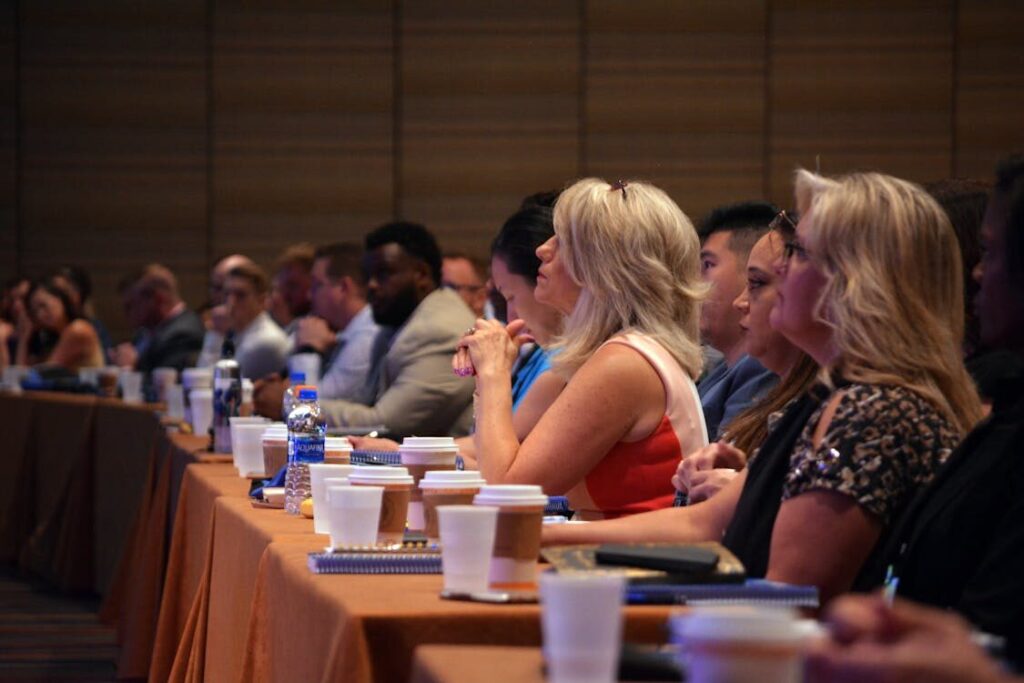
When an event brings together participants from multiple countries, accessibility takes on an even broader dimension. Cultural and linguistic diversity adds another layer to the different ways people interact with content.
At international gatherings, organizers often consider tools that allow all attendees to follow conversations comfortably. In some cases—especially when the audience includes participants from diverse communities—services such as ASL remote interpretation are integrated, enabling people who use sign language to participate more easily in professional contexts.
These kinds of solutions do more than address a specific need. They also send a clear message about the type of environment organizations aim to create.
The Value of Hearing Every Voice
Conversations during a corporate event do not always follow a predetermined script. Often, the most interesting contributions emerge from unexpected questions or comments from the audience.
When all participants can engage actively, the event becomes a space for collective learning. Ideas circulate more freely, and discussions gain a richness that is difficult to achieve when only a few people can participate.
Accessibility helps make this dynamic possible. By removing communication barriers, it allows a diversity of perspectives to be fully expressed.
An Approach That Continues to Evolve
Organizations that host international events continue exploring new ways to make these gatherings more inclusive. Each experience provides insights into how to improve interaction among participants and how to adapt traditional formats to increasingly diverse audiences.
In this process, accessibility is no longer treated as an element added at the end of the planning stage. Instead, it becomes part of the event’s core design. When organizers consider from the beginning how to enable everyone to participate, the result is often a space where conversations flow more naturally and where different voices truly find their place in the exchange.